
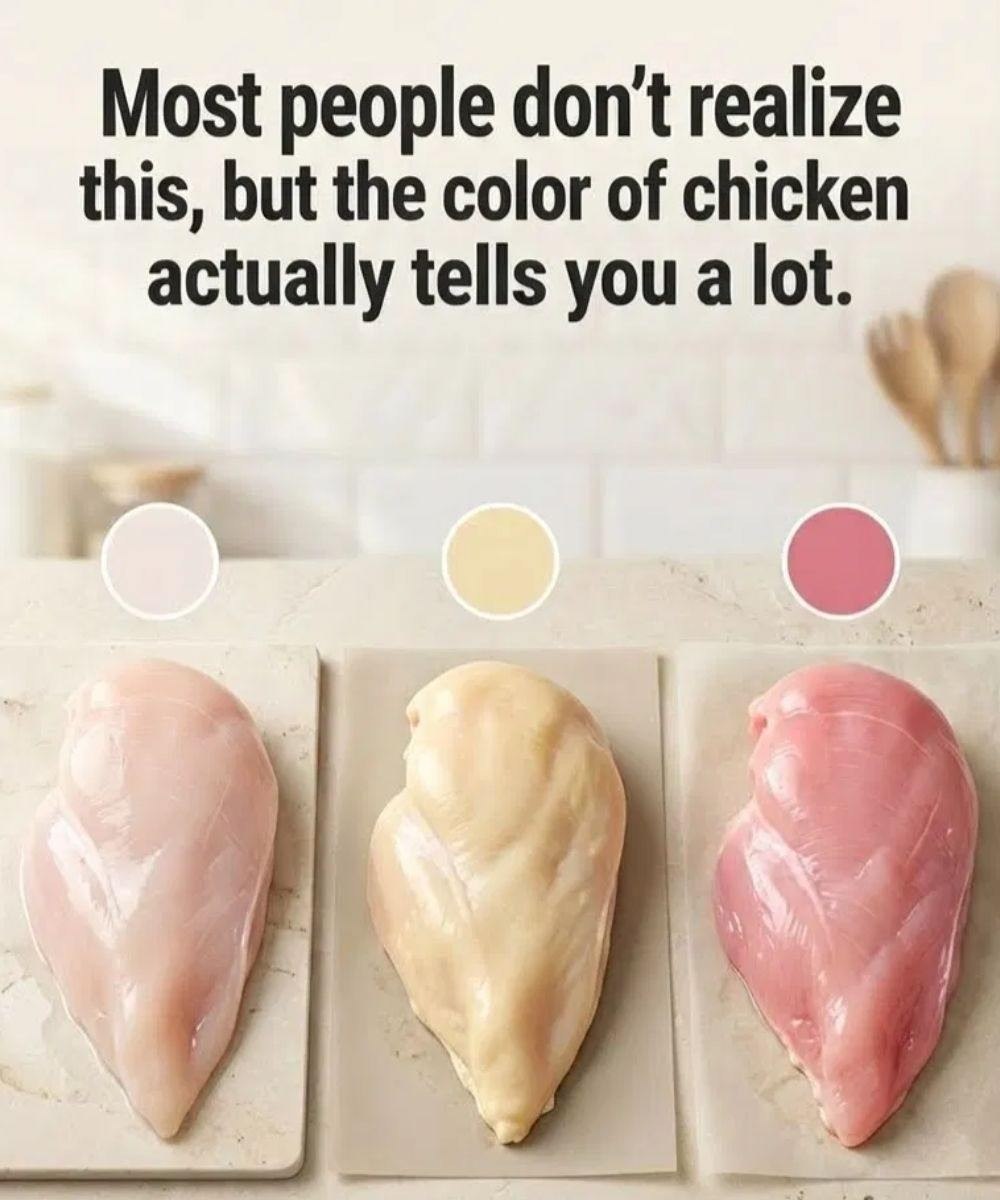
The golden chicken suggests a different narrative.
This richer tone often comes from a diet colored by nature—corn, marigold, grasses—full of natural pigments called carotenoids. Birds that peck outdoors, eating insects and moving freely, tend to develop this warmer shade. The slower journey from coop to kitchen often translates to firmer texture and a more robust flavor, reminiscent of what many call “the way chicken used to taste.”
But color can be a clever storyteller, and not always an honest one. Some producers use pigment-rich feed to create that desirable golden hue, capitalizing on our associations, even if the bird’s life was otherwise confined. The color, in these cases, is a costume. It reminds us that appearance alone is an unreliable guide to ethics or taste.
The truth lies beneath the surface.
Labels offer a clearer chapter: pasture-raised, organic, free-range. These terms provide real insight into living conditions, diet, and welfare. Your senses are trustworthy editors, too. Fresh chicken should smell clean and feel firm; any off-odor signals spoilage, regardless of color. And in the end, the final proof is always on the plate—in the juiciness and flavor shaped more by life than by looks.
There is no single “correct” color. The right choice is a personal composition of your values, your budget, and your meal. Sometimes convenience leads, sometimes flavor, sometimes conscience. These priorities are not written in gold or pale pink.
The meat aisle is a library of untold stories. Color is merely the title on the spine. The rest of the book is yours to read.
